Sequential Thinking in Reel Games and Its Parallels to Multi-Outcome Wagering on Mobile Interfaces
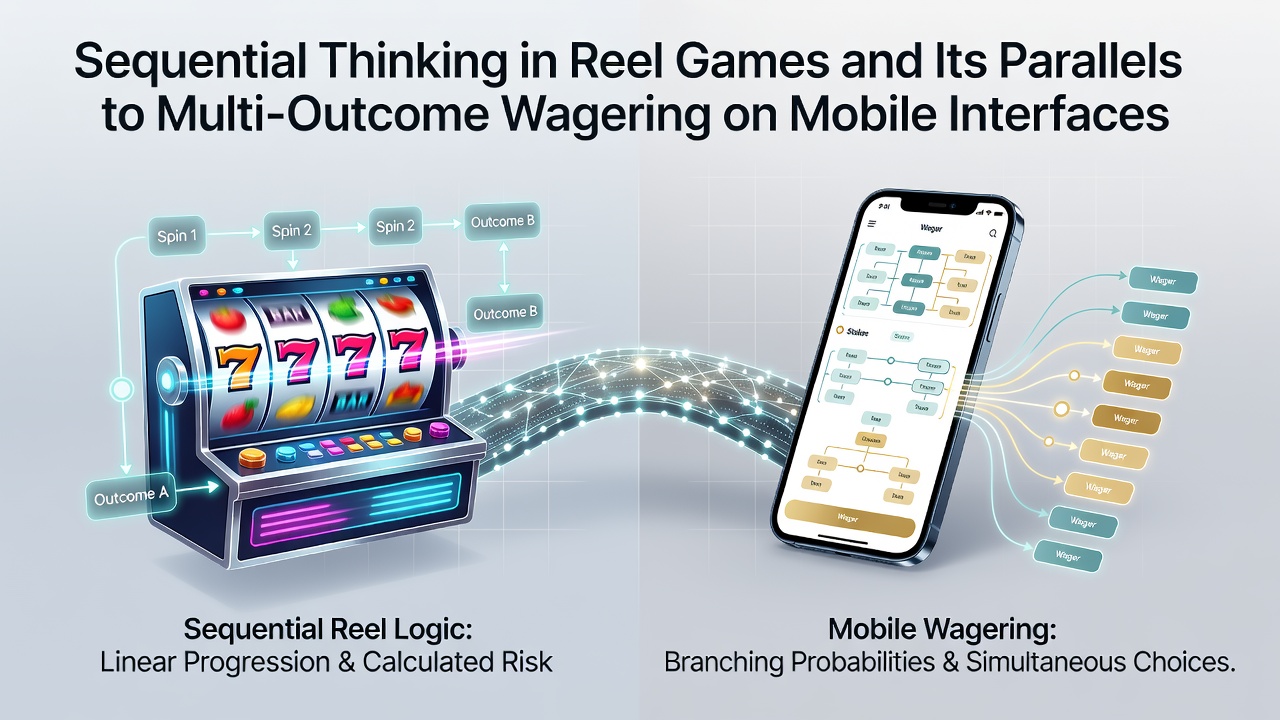
Sequential thinking appears in reel games when players evaluate symbols one position at a time as reels stop, building expectations across multiple stages of a single spin. This process mirrors multi-outcome wagering on mobile interfaces where bettors construct accumulators by selecting successive events that each depend on prior results for overall payout calculation. Data from industry tracking services shows increased participation in both formats during the first half of 2026 as mobile platforms integrate visual feedback that highlights progressive outcomes.
Mechanics of Sequential Processing in Reel-Based Games
Reel games present symbols across fixed positions, and players often track alignment from left to right or top to bottom while anticipating the next reel result. Research published in cognitive science journals indicates that this step-by-step evaluation engages working memory circuits similar to those used in sequential decision tasks outside gambling environments. Mobile versions of these games display animated stops that pause briefly between reels, allowing users additional time to update their internal probability estimates before the final symbols lock in place.
Operators have introduced features such as cascading reels and expanding wilds that extend the sequence across multiple rounds within one paid spin. Figures released by the Nevada Gaming Control Board for early 2026 reveal that slots incorporating these mechanics accounted for over 40 percent of total slot revenue at major properties, reflecting sustained player engagement with extended outcome chains.
Cognitive Overlaps with Accumulator Construction on Mobile Platforms
Multi-outcome wagering requires users to combine individual selections into a single ticket where each leg must succeed for the full multiplier to apply. Observers note that bettors frequently review selections in order, adjusting stake amounts or removing legs after evaluating updated odds displayed in real time. This mirrors the reel-by-reel assessment in slots because both activities demand continuous recalculation of remaining possibilities as new information arrives.
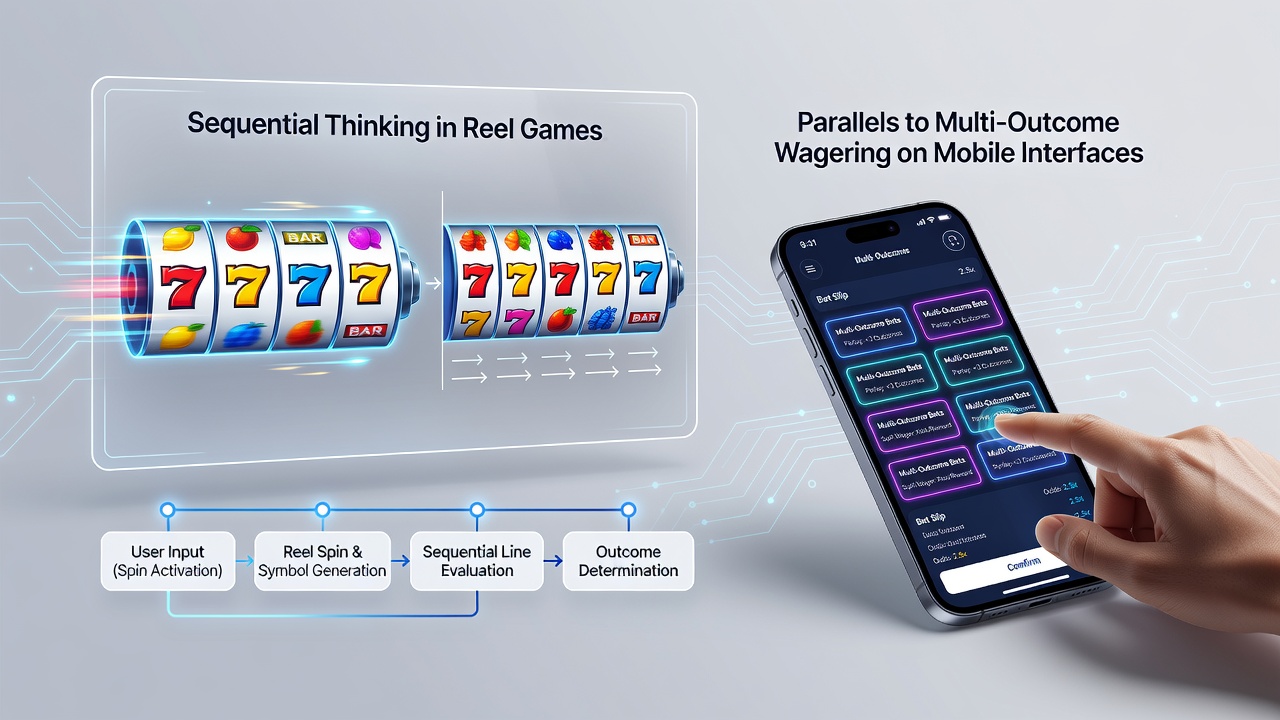
App developers embed progress indicators that highlight each confirmed outcome before prompting the next selection, creating a visual parallel to spinning reels. Studies conducted by researchers at the University of Sydney's Gambling Research Unit have documented comparable patterns of eye movement and decision latency between participants playing sequential slot features and those building live sports accumulators on tablet interfaces.
Interface Design Elements That Reinforce Sequential Evaluation
Design teams incorporate numbered stages and progress bars in both slot and sports betting applications to guide attention along a defined sequence. In June 2026 several major platforms updated their mobile interfaces to include dynamic highlighting that draws focus to the current reel or betting leg, reducing visual clutter while maintaining the chain of decisions. These changes align with accessibility guidelines issued by the Australian Communications and Media Authority that recommend clear sequential cues for interactive gaming content.
Sound design further supports sequential processing through distinct audio cues that mark each stage completion, whether a reel locks or a leg confirms. Data collected from user session logs indicates shorter average decision intervals when these auditory markers accompany visual progress indicators, suggesting improved information uptake across both game categories.
Shared Pattern Recognition Requirements
Players engaging with reel sequences learn to recognize near-miss configurations that precede higher-value alignments, while accumulator builders track correlated events across different markets. Both activities rely on rapid identification of recurring patterns within constrained time windows provided by the interface. Industry reports compiled by the European Gaming and Betting Association document rising cross-category play among users who maintain accounts on unified mobile platforms that host both reel titles and live odds.
Training modules embedded in some applications present simplified sequential tasks that reward accurate prediction of next-stage outcomes, transferring directly between slot mechanics and parlay construction. These tools appear more frequently in jurisdictions where regulators permit integrated casino and sports betting applications under single licenses.
Conclusion
Sequential thinking forms a common cognitive thread linking reel game evaluation to multi-outcome wagering on mobile devices. Interface features that emphasize staged progression support this mode of processing in both contexts, while regulatory and academic data from multiple regions confirm sustained user interaction with these mechanics through mid-2026. Continued refinement of visual and auditory cues will likely maintain these parallels as platforms evolve.