Navigating Reward Loops Connecting Digital Reel Mechanics With In-Play Market Adjustments on Handheld Platforms
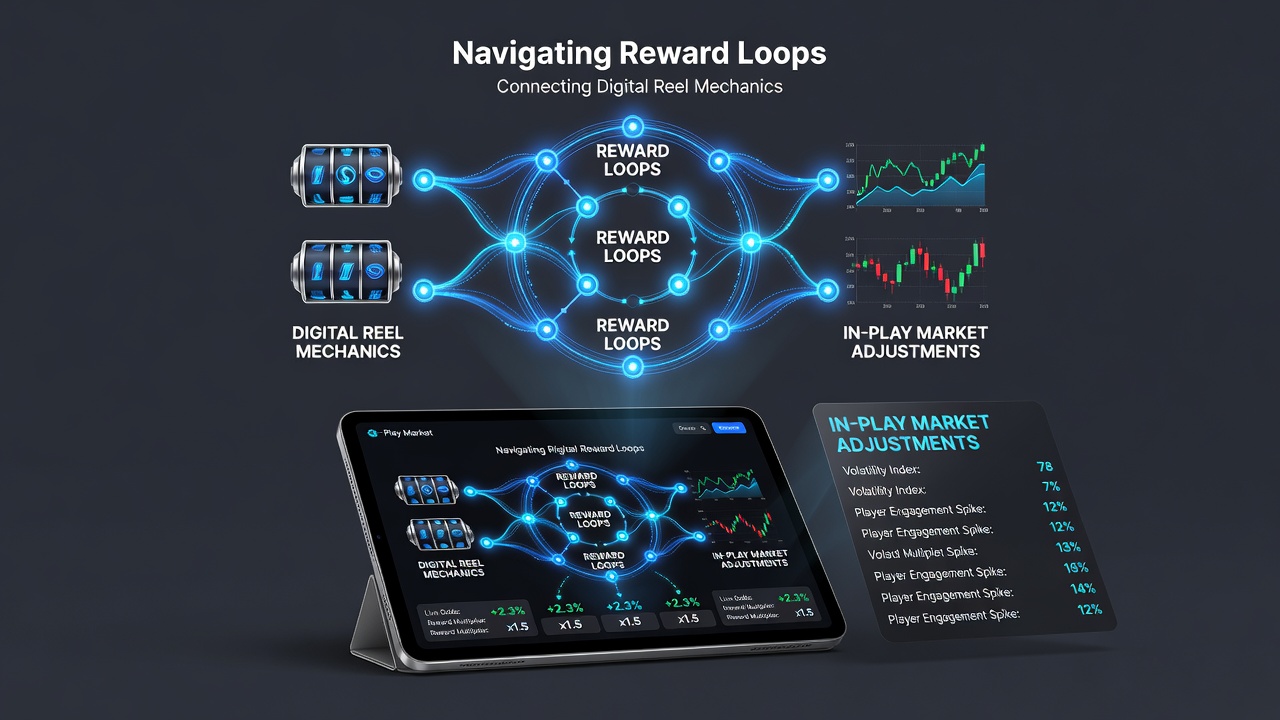
 Observers note that modern handheld platforms integrate digital reel systems with live betting environments through shared reward structures, where spin outcomes feed into dynamic odds calculations and vice versa. Data from industry tracking services shows these connections rely on real-time algorithms that monitor player engagement patterns across both game types, adjusting parameters such as bonus trigger frequencies and market volatility indicators within the same session. Digital reel mechanics operate on random number generators that determine symbol alignments, yet developers layer additional reward loops onto these foundations, creating sequences where consecutive wins unlock multipliers or free spins. These loops gain complexity when platforms link them to in-play adjustments, allowing a successful reel sequence to influence betting market availability on the same device. Researchers at the University of Nevada, Reno documented how such linkages appear in app architectures, with backend systems synchronizing reel state data to live odds feeds every few seconds during active play. In-play market adjustments occur when betting interfaces recalculate probabilities based on unfolding events, incorporating factors like player substitutions or score changes. On handheld devices these adjustments intersect with reel rewards because many applications present both features within unified dashboards, enabling users to toggle between spinning reels and placing live wagers without leaving the primary screen. Figures released by the Canadian Centre on Substance Use and Addiction indicate rising session durations in jurisdictions where such combined interfaces launched during early 2026 updates.
Mechanics of Reward Integration
Platform engineers design reward loops that treat reel bonuses and in-play odds shifts as interchangeable progression markers, so a triggered reel feature might expand available live markets while an odds movement could accelerate reel bonus accumulation. This approach stems from shared data pipelines that track metrics including spin velocity and wager frequency, then apply them uniformly across game modules. One study published in the Journal of Gambling Studies examined code samples from major providers and found consistent use of unified user profiles that carry reward states between reel and market environments.
Handheld operating systems support these integrations through background processes that maintain continuous connections to central servers, ensuring adjustments propagate instantly across features. Observers point out that June 2026 updates from several providers introduced enhanced caching mechanisms, reducing latency in reward synchronization during high-traffic periods. The result appears in smoother transitions when users move from a reel bonus round directly into an adjusted live market without manual refresh steps.Platform Architecture Patterns
Application frameworks employ modular components where reel engines communicate with market engines via standardized APIs, allowing reward multipliers earned on reels to modify stake limits or payout structures in live betting sections. Data indicates this design reduces development overhead while increasing cross-feature retention metrics tracked by analytics firms. Those who've analyzed user logs note that players often maintain longer engagement when reward progress carries over between the two systems.
 Security protocols on these platforms encrypt the shared reward data streams, preventing unauthorized alterations to either reel outcomes or live market feeds. Regulatory frameworks in multiple regions require separate auditing trails for each component even when reward loops connect them, according to documentation from the Australian Gambling Research Centre. Compliance teams therefore implement segmented logging that still permits real-time data exchange for user-facing features.
User Session Dynamics
Session analytics reveal patterns where reel reward triggers coincide with spikes in live market activity, particularly during major sporting events when odds fluctuate rapidly. Platforms respond by scaling reward loop intensity, such as increasing bonus reel frequency when users engage heavily with adjusted in-play options. Evidence from aggregated platform reports suggests these adjustments correlate with higher overall transaction volumes without altering underlying random generation rules.
Developers incorporate feedback mechanisms that let the system detect when a user completes a reel reward cycle and immediately surface relevant in-play opportunities, or when a market adjustment occurs and then highlight compatible reel features. This bidirectional prompting relies on predictive models trained on historical session data, producing recommendations that update within milliseconds of each event.Conclusion
The connections between digital reel reward loops and in-play market adjustments on handheld platforms rest on integrated data systems that maintain consistent user states across game types, supported by continuous server communication and modular software design. Reports from multiple research bodies confirm these architectures continue evolving through incremental updates, with notable refinements appearing around June 2026 that improved synchronization speed and cross-feature tracking capabilities. Such developments remain subject to ongoing regulatory oversight focused on data integrity and responsible implementation standards.