Cognitive Load Factors in Alternating Between Reel Mechanics and Point Spread Calculations on Wireless Casino Interfaces
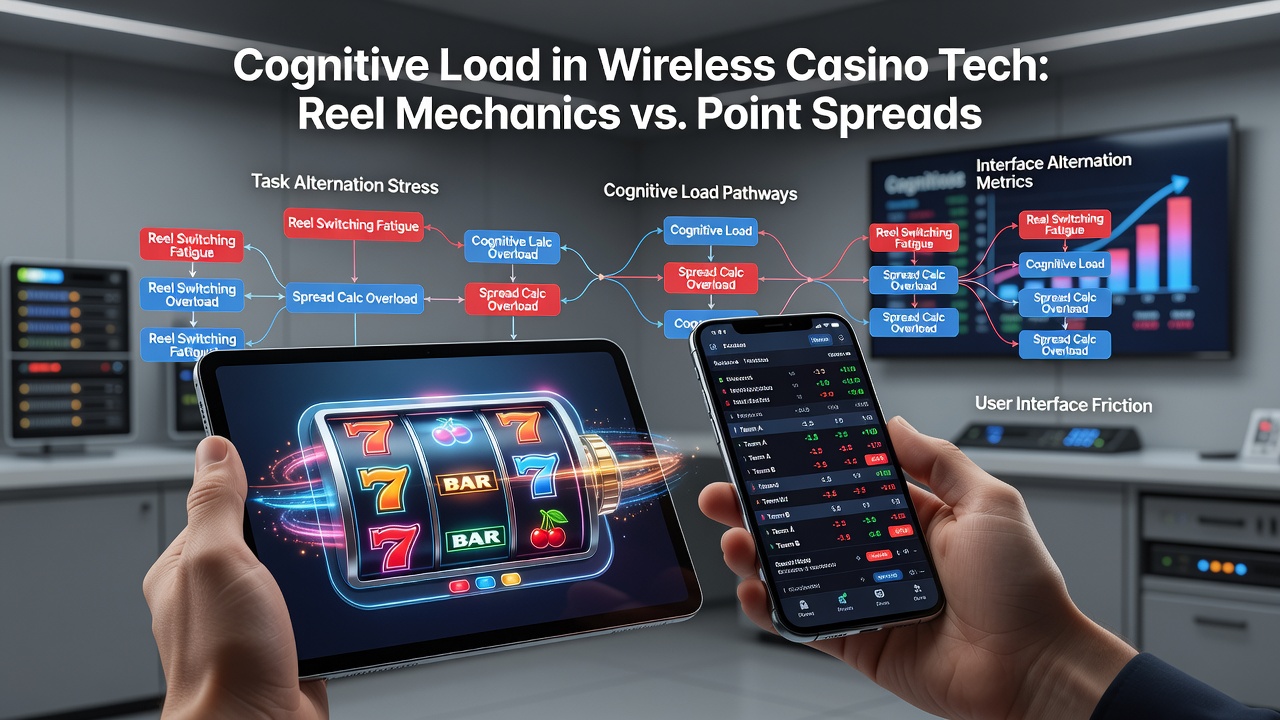
Wireless casino interfaces have grown increasingly complex as operators integrate slot reel mechanics with live sports betting features such as point spread calculations; players frequently shift attention between spinning reels that rely on symbol matching and probability sequences while simultaneously evaluating numerical spreads that adjust in real time based on team performance metrics and betting market movements. Research from the University of Nevada Reno's gaming studies program indicates that these rapid alternations impose measurable demands on working memory and attentional resources particularly when users operate on smaller wireless screens that limit visual field and require precise finger inputs for both game types.
Core Elements of Reel Mechanics on Mobile Platforms
Reel mechanics in wireless slots involve visual tracking of multiple spinning columns that stop at predetermined positions while bonus features trigger through specific symbol alignments and payline evaluations; players must process payout tables and volatility indicators without disrupting the flow of spins and studies conducted by the Nevada Gaming Control Board show that interface animations and sound cues add layers of sensory input that compete for cognitive bandwidth during extended sessions. Data collected through June 2026 reveals that mobile slot users average 12 to 18 reel engagements per minute when playing high-volatility titles yet any overlay of sports data panels increases the time required for accurate symbol recognition by approximately 23 percent according to aggregated operator reports.
Point Spread Calculations in Integrated Sports Wagering
Point spread calculations require users to interpret numerical margins such as a favored team minus 6.5 points against an underdog while factoring in live odds adjustments driven by in-game events and these tasks demand sequential arithmetic alongside probabilistic forecasting; when wireless interfaces display both slot reels and betting odds in adjacent panels the need to toggle between visual pattern matching and numerical evaluation creates distinct cognitive pathways that researchers at the Canadian Institute for Gaming Research have tracked through eye-movement studies. Figures from the first half of 2026 indicate that bettors who alternate between these elements within the same app session exhibit longer decision latencies compared with those who focus on a single game category at a time.
Task-Switching Demands on Wireless Screens
Alternating between reel mechanics and point spread calculations activates the brain's executive control network which manages goal shifting and rule updating yet wireless devices introduce additional constraints through touch-based navigation and variable network latency; a report issued by the Australian Gambling Research Centre in early 2026 documented that players switching tasks every 45 seconds or less experience elevated error rates in both symbol identification and spread evaluation. Interface designers address these pressures by grouping related controls within thumb-reach zones while maintaining clear visual separation between slot grids and betting calculators although screen size limitations often force overlapping elements that further tax selective attention.

Operators have introduced collapsible panels and swipe gestures to reduce the physical distance users travel across the screen and these adjustments appear in several major platforms updated during July 2026; however the underlying cognitive load remains because users must still maintain mental representations of both game states simultaneously. Observers note that split-second decisions such as activating a slot bonus round while monitoring a narrowing point spread create interference effects documented in controlled laboratory simulations of mobile gambling environments.
Interface Design Patterns and Cognitive Resource Allocation
Design patterns that separate reel displays from betting calculators through color coding and spatial zoning help users maintain distinct mental models for each activity while integrated notification systems alert players to changes in either domain without forcing immediate context switches; data released by the European Gaming and Betting Association highlights that platforms employing modular layouts recorded lower rates of unintended bet placements during mixed-activity sessions through mid-2026. Color contrast ratios and font scaling options further influence how quickly users parse information when moving between spinning reels and dynamic spreads although individual differences in working memory capacity produce varying tolerance levels across player populations.
Performance Metrics Observed in Mixed-Use Sessions
Performance metrics collected from wireless casino applications reveal that error frequency rises when reel spins coincide with live point spread updates and participants in observational studies required additional confirmation steps before finalizing wagers after switching from slot interfaces; these patterns hold across multiple device types and operating systems used in North American markets. Training modules offered within some applications guide users through practice alternations between mechanics and calculations yet adoption rates remain modest according to usage logs compiled in the second quarter of 2026.
Conclusion
Cognitive load factors emerge clearly when players alternate between reel mechanics and point spread calculations on wireless casino interfaces because each activity recruits overlapping yet distinct cognitive processes that compete for limited attentional resources on constrained mobile displays. Continued refinement of interface elements including modular layouts and gesture controls reflects ongoing efforts to manage these demands while regulatory and research bodies track performance indicators across evolving platforms. As wireless technology advances through 2026 and beyond the interplay between visual pattern recognition and numerical evaluation will remain a central consideration in how operators structure multi-game environments.